The Coastal Trades: How Short-Sea Shipping Quietly Moves the World's Economies
From the monsoon dhow routes of the Indian Ocean to the battery-electric coasters of Norway — a global survey of shipping's oldest and most underrated trade network.
Prepared for publication on drsamtariverdi.com | October 2026
The Coastal Trades: How Short-Sea Shipping Quietly Moves the World's Economies
A deep dive into the world's oldest — and arguably most underrated — trade network, from the dhow routes of the Indian Ocean to the battery-powered coasters of Norway.
Executive Summary
While the headlines of maritime news belong to 24,000-TEU mega-ships and transoceanic trade wars, a quieter, older, and astonishingly large industry hums along the world's shorelines every day: the coastal trades. Short-sea shipping — the movement of cargo and passengers along coastlines and across enclosed seas without crossing an ocean — accounts for roughly 58% of all seaborne goods moving to and from the European Union's main ports, some 1.6 billion tonnes a year (Eurostat). In the United States, the domestic fleet moving coastwise, intercoastal, Great Lakes and inland cargo carries over one billion short tons annually (Transportation Institute). In Japan, coastal shipping has held around 40% of the entire domestic freight task measured in tonne-kilometres for nearly four decades (ScienceDirect).
This article examines the coastal trades as a global system: what they are, where they came from, how much cargo they actually move, the real ships and real routes that define them, why governments from Brasília to Jakarta are pouring policy money into them, and why the sector — historically one of the dirtiest corners of shipping — is now producing some of the industry's most advanced zero-emission vessels. All figures are drawn from official statistics, regulator filings, and peer-reviewed or institutional sources, cited inline.
1. What Exactly Are "the Coastal Trades"?
The term "coastal trade" is used loosely in everyday speech, but in the maritime industry it describes a precise family of activities. At its core, coastal trade means the commercial carriage of goods or passengers by sea between ports of the same country, or between neighbouring countries across a shared or enclosed sea, without an ocean crossing. The UK government's statistical definition is a good working one: short-sea traffic is "maritime traffic that moves cargo along a coast without having to cross an ocean" (UK DfT). The European Commission uses a closely related definition for short sea shipping (SSS): the movement of goods between EU ports on one hand and ports in geographical Europe, the Mediterranean and the Black Sea on the other (EU Blue Economy Report 2025).
Within this family sit several distinct sub-segments, each with its own vessels, business models and regulation. Cabotage is coastal trade in the strict legal sense — transport between two points in the same country, which most states reserve (fully or partially) for their own flag. Feeder shipping connects smaller regional ports to the great container hubs where ocean-going vessels call. Ro-Ro (roll-on/roll-off) short-sea services carry trucks, trailers and cars across seas such as the North Sea, the Baltic and the Mediterranean, effectively substituting ships for long stretches of motorway. And domestic bulk distribution — coal, ore, cement, grain, oil products — links mines and refineries to power plants and factories along a national coastline. What unites all of them is geography: short distances, frequent port calls, and a competitive relationship not with other ships but with trucks and trains.
The scale of this "quiet" sector is anything but small. Global seaborne trade of all kinds reached 12,720 million tonnes in 2024 (UNCTAD), and around 80% of world merchandise trade by volume travels by sea (UNCTAD). Within that total, the coastal and short-sea segment is the single largest block of intra-regional movement: short-sea shipping alone represents about one third of intra-EU freight exchanges measured in tonne-kilometres (European Commission), and in the United Kingdom — an island economy par excellence — short-sea routes accounted for 65% of all international tonnage through UK ports in 2025 (UK DfT).
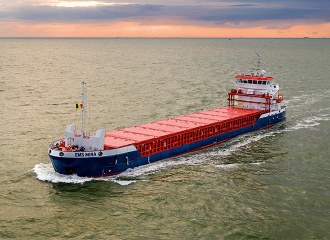
A small coastal general cargo vessel ("coaster") underway in European waters. Ships of 1,500–8,500 dwt like this one form the backbone of the European coastal trades. Photo: Uniatlantico.
2. The Oldest Trade Network on Earth
Long before containerisation, before steam, before the nation-state, there were coastal trades. The Periplus of the Erythraean Sea, a Greek merchant's handbook written around 60 AD, already describes an established coastal trading system linking the ports of East Africa, Arabia, the Persian Gulf and India, with dhow-type vessels riding the seasonal monsoons — the northeast Kaskazi down the African coast from November to March, the southwest Kusi home again from April (AJA). The vessels themselves were masterpieces of indigenous engineering: East African mtepe were sewn together with coconut coir rope rather than nailed, giving hulls the flexibility to ride over surf and coral shallows that would have broken a rigid frame.
That monsoon-driven coastal system endured for well over a thousand years and, remarkably, has never entirely stopped. To this day, dhows make commercial voyages between the Persian Gulf and East Africa, carrying dates and fish south and mangrove timber north, often under sail alone (Wikipedia: Dhow). In the northern Arabian Sea, the dhow trade remains commercially significant: these wooden vessels ship an estimated 14,000–18,000 tonnes of foodstuffs per month to Yemen, with individual boats carrying up to 2,000 tonnes on voyages of five to eight days, and dhows continue to be built in Gujarat and Kerala in India, and in Iran, Oman and the UAE (IPCS). The coastal trade, in other words, is not a historical relic — in parts of the Indian Ocean it is still the primary logistics system.
Traditional dhows under sail in the Indian Ocean at sunset. The monsoon coastal trade between Arabia, the Gulf, India and East Africa has operated for well over a millennium — and still does. Photo: Serengeti African Tours.
The same pattern repeated wherever coastlines and commerce met: the Hanseatic cog routes of the Baltic and North Sea, the junk trades of the China coast and Southeast Asia, the collier brigs carrying "sea coal" from Newcastle to London for six centuries, the schooners and later tramp steamers of the Mediterranean and the American seaboard. What changed in the 20th century was propulsion, size and regulation — not the underlying logic. Coastal waters remain the cheapest way to move heavy things moderate distances, and that logic is as powerful in 2026 as it was in 60 AD.
3. The Global Picture in Numbers
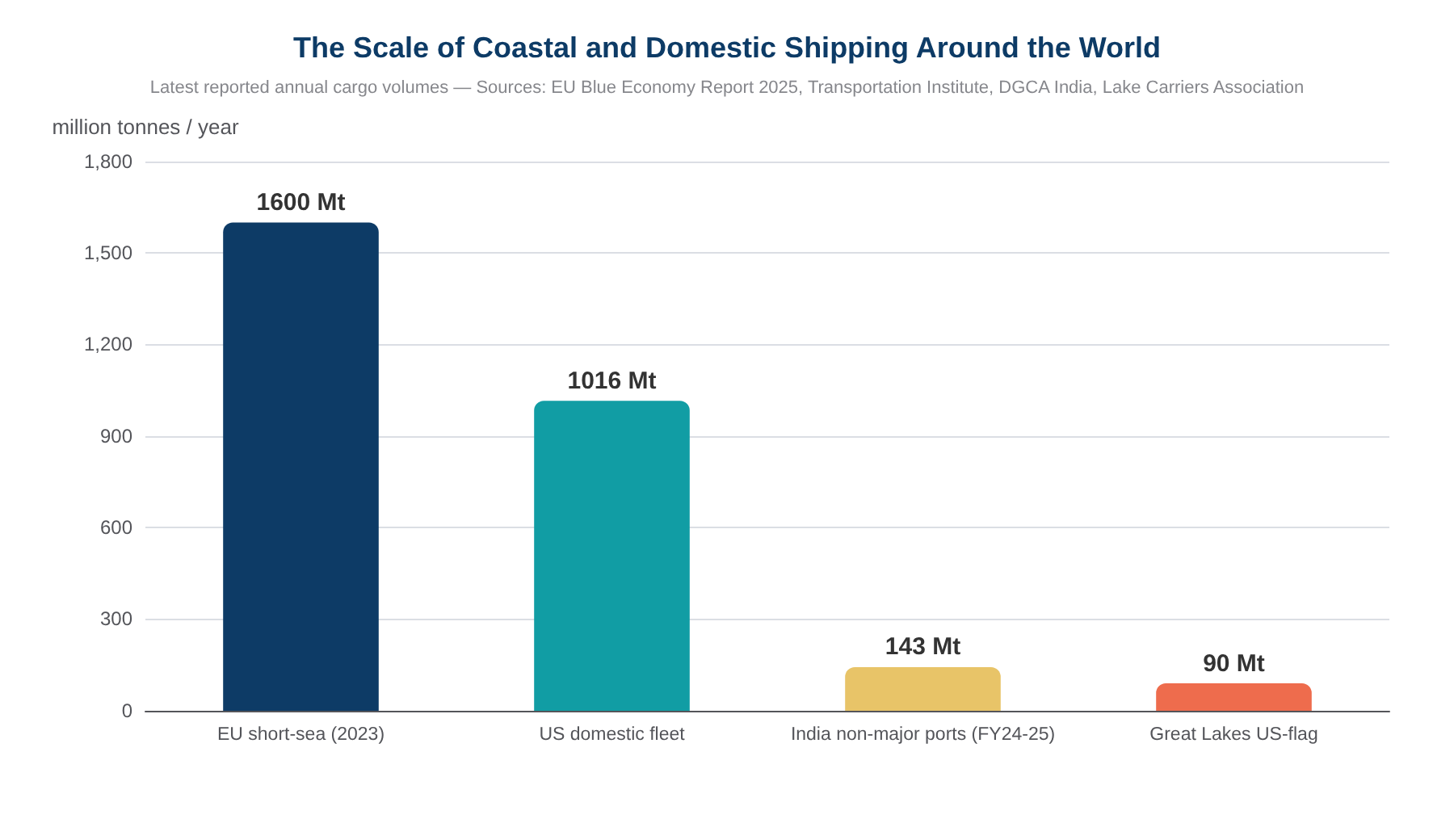
Measured properly, the coastal trades are one of the largest freight systems on the planet — larger, by tonnage, than many entire national transport networks. Figure 3 aggregates the most recent official figures for the biggest coastal and domestic shipping systems: the European Union's short-sea market at roughly 1.6 billion tonnes per year, the US domestic fleet at over one billion short tons, India's coastal cargo at non-major ports alone at 143 million tonnes in FY 2024-25, and the US-flag Great Lakes fleet at more than 90 million tonnes annually (EU Blue Economy Report 2025, Transportation Institute, DG Shipping India, Lake Carriers' Association).
Coastal and domestic shipping volumes around the world (author's chart from the cited official sources).
Even these impressive bars understate the sector, because several giants are missing from the chart for lack of comparable single figures. China's coastal shipping — the "north coal to south" energy conveyor and much else besides — operates inside a port system that handled 17.6 billion tonnes of freight in 2024, of which 5.4 billion tonnes was foreign trade, implying that the domestic and coastal share is far larger than the EU's entire seaborne market (NBS China). Vietnam's coastal shipping carried over 60% of domestic freight turnover with an average trip length of about 1,650 km according to Vietnam's General Statistics Office data cited in a JICA survey (JICA).
Commercial estimates of the market's monetary value vary enormously depending on definition — one research house valued the "short sea shipping service" market at just USD 3.13 billion in 2025 growing at ~5.7% CAGR, while another put the broader "short sea shipping market" at USD 58.0 billion in 2025 rising toward USD 92 billion by 2034 (24MarketReports, Dataintelo). The discrepancy itself is instructive: depending on whether one counts only third-party shipping services or the full logistics value of coastal freight (including cabotage tankers, Ro-Ro, ferries and port services), the answer differs by an order of magnitude. What is not in dispute is the direction of travel — steady mid-single-digit growth, driven by intra-regional trade integration, road congestion, driver shortages and decarbonisation policy.
4. Europe: The World's Most Developed Coastal Market
4.1 A continent built for short-sea shipping
Europe is the natural laboratory of the coastal trades: a peninsula of peninsulas wrapped around the North Sea, the Baltic, the Mediterranean and the Black Sea, with more coastline relative to land area than any other major economy. The numbers reflect it. In 2024 the gross weight of goods moved by short-sea shipping to and from EU ports was estimated at more than 1.6 billion tonnes, with Italy the largest national market at 15.6% of the EU total, followed historically by the Netherlands (282 Mt) and Spain (225 Mt) in 2022 figures (Eurostat). Short-sea shipping accounted for 58.2% of all sea transport of goods to and from main EU ports in 2022 — and in 14 member states, from Malta and Cyprus to Sweden, Finland and Greece, the short-sea share was two-thirds or more (Eurostat).
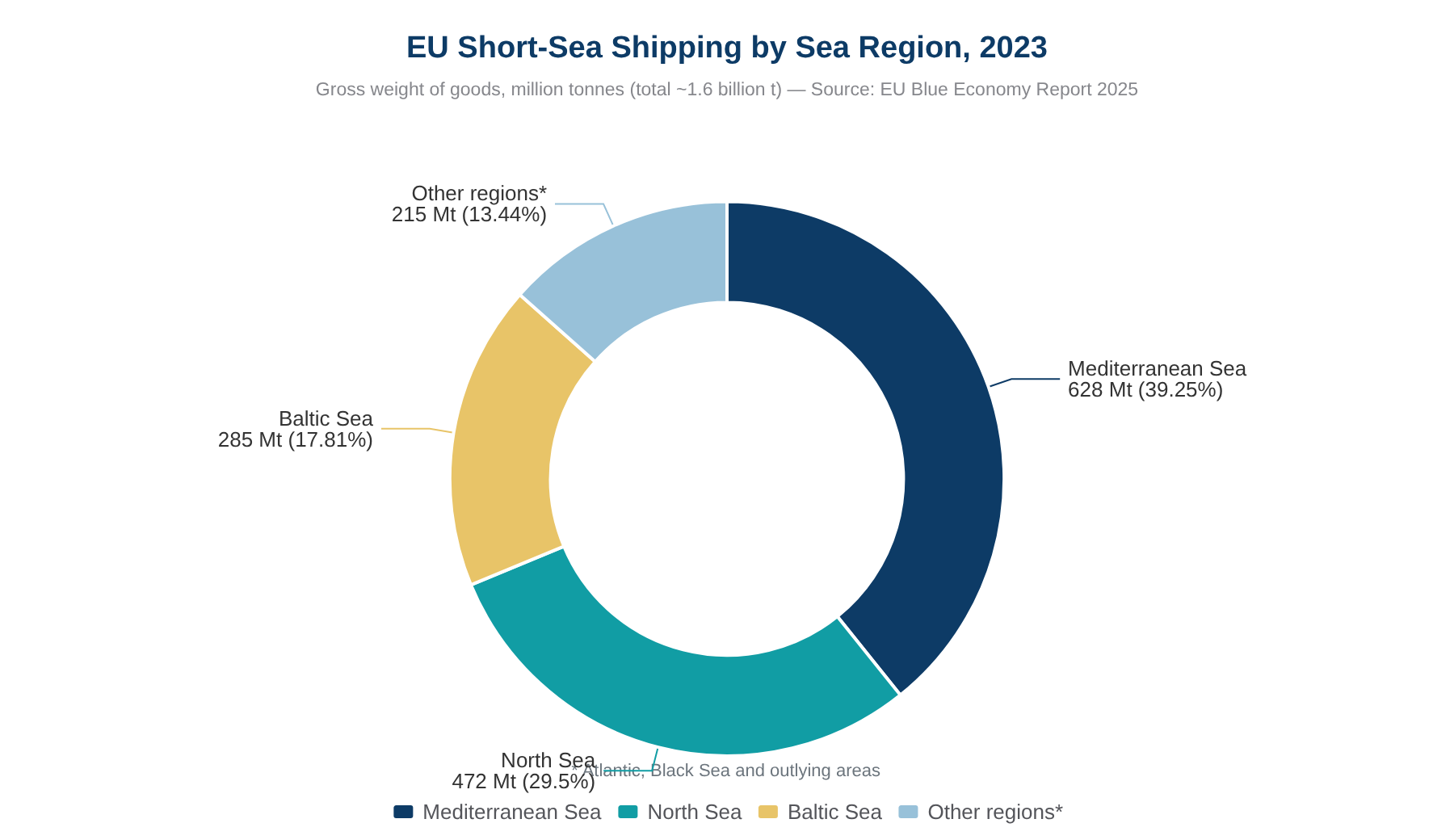
Geography writes the cargo manifest. In 2023 the Mediterranean carried 39% of EU short-sea tonnage (628 Mt), followed by the North Sea at 29% (472 Mt) and the Baltic at 18% (285 Mt) (EU Blue Economy Report 2025). Liquid bulk dominates in the Black Sea (58% of short-sea tonnage there), containers are prominent in the Mediterranean (21%), and Ro-Ro units dominate the Baltic (23%) — each sea has its own coastal-trade personality (Eurostat).
EU short-sea shipping by sea region, 2023 (author's chart; data from the EU Blue Economy Report 2025).
4.2 Motorways of the Sea: policy as infrastructure
Since the 1990s the European Union has treated short-sea shipping as deliberate transport policy, not just commerce. The Motorways of the Sea (MoS) programme, embedded in the Trans-European Transport Network, funded more than 40 projects with over EUR 400 million in EU incentives, leveraging an estimated EUR 2 billion of public and private investment; the earlier Marco Polo programme (2003–2013) awarded 172 grants to over 650 companies to shift freight from road to sea, rail and inland waterways (European Parliament, European Commission). The results were real but modest: a European Parliament study conceded that despite the investment, SSS's modal share actually slipped slightly between 2001 and 2011, because market conditions — road haulage prices, port handling costs, administrative friction — matter more than grants (European Parliament).
The policy nonetheless created durable services that have become institutions. On the Turkey–EU corridor, Turkish Ro-Ro operator U.N. Ro-Ro built a network of 12 ferries on five short-sea routes to Italy and France that carried 202,000 trailers in 2017 — trucks that would otherwise have driven through the Balkans — before being acquired by Danish operator DFDS for EUR 950 million in 2018, creating one of the largest short-sea Ro-Ro networks in the world (Freightweek). In the dry-cargo coaster segment, Norway's Wilson ASA operates around 135–140 vessels of 1,500–8,500 dwt, making it the largest short-sea shipping company in Europe, while Ireland's Arklow Shipping fields a fleet of roughly 60 coasters (Wilson, Afloat).
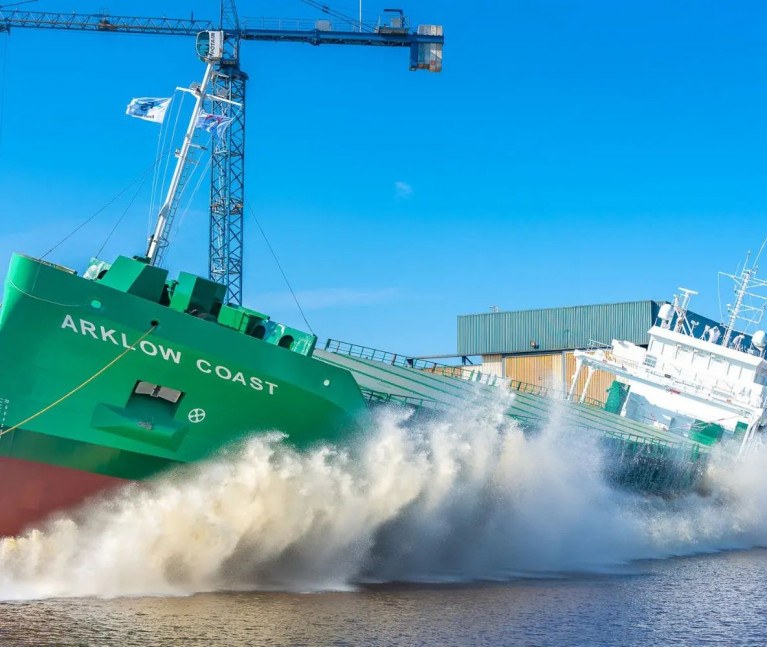
The newly built short-sea coaster Arklow Coast at launch — Arklow Shipping's fleet renewal is bringing more efficient, lower-emission coasters into the European coastal trades. Photo: Afloat.ie.
5. Asia: Where Coastal Shipping Is Industrial Infrastructure
5.1 China's coastal conveyor belts
Nowhere is coastal shipping more tightly fused to national industry than in China. The flagship example is the "north coal to south" system: coal from Shanxi, Shaanxi and Inner Mongolia — provinces producing about 70% of China's thermal coal — moves by dedicated rail to Bohai Sea ports, above all Qinhuangdao, China's largest coal transhipment port, which handled 414 million tonnes of total cargo in 2024 and operates 23 dedicated coal berths with design capacity above 226 million tonnes a year; from there, Panamax and Handymax bulk carriers run 1,500–2,000 km coastal routes to power plants across eight southern provinces at a cost 40–60% below rail (Ballast Markets / IMF PortWatch). During peak winter season the port loads 1.8–2.2 million tonnes of coal per week — equivalent to a 70,000-dwt Panamax every 5.6 hours, around the clock (Ballast Markets).
Coastal liquid trades are equally industrial in scale. In the first half of 2024, China's domestic crude oil coastal shipping market moved approximately 42.22 million tonnes, according to COSCO Shipping Energy Transportation's interim report, which also recorded RMB 2.90 billion in domestic oil shipping revenue for the period (COSCO Shipping Energy). Coastal LPG and chemicals trades continue to grow: domestic shipments of LPG, butadiene and propylene reached 2.73 million tonnes in the first half of 2025, up 8.3% year-on-year, with operators noting that the coastal domestic market is less exposed to international trade shocks than deep-sea segments (HKEX filing).
5.2 Japan: forty years of a 40% modal share
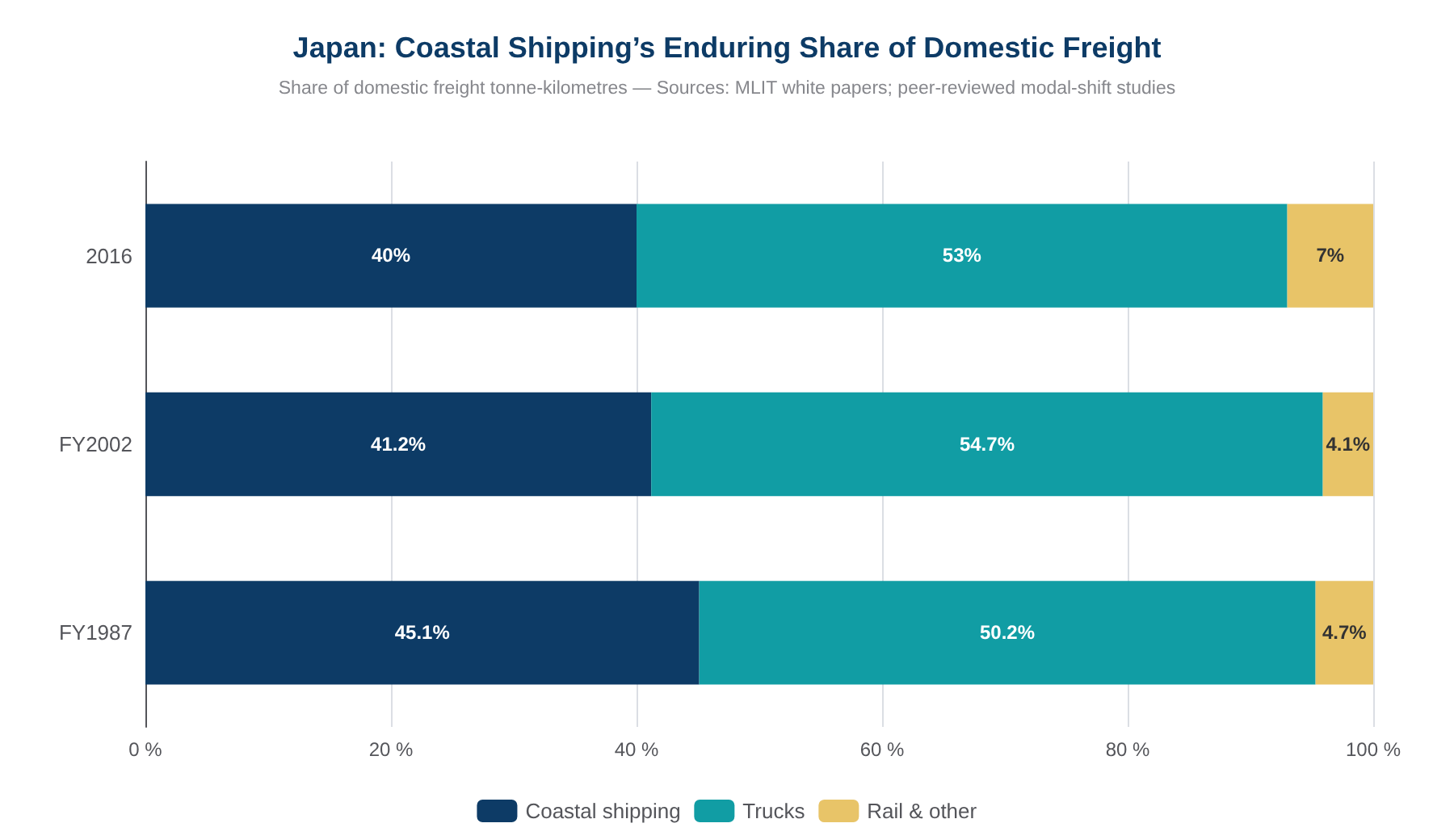
Japan is the classic archipelagic case where coastal shipping is not an alternative but a foundation. As early as fiscal 1979, coastal shipping carried 51.1% of Japan's domestic freight in tonne-kilometres, moving the bulk of the country's oil, coal, steel and limestone (MLIT). By fiscal 1987 the share was 45.1%, and as of 2016 coastal and inland shipping still held about 40% of the tonne-kilometre modal share, a figure that has stayed remarkably stable for decades even as trucks took over tonnage (MLIT, ScienceDirect).
The stability is structural: Japan's heavy industry was deliberately located on the waterfront, so steel mills, cement plants and oil refineries feed directly onto dedicated coastal vessels — limestone carriers, cement carriers, product tankers — running fixed shuttle routes. Since 1981 Japanese governments have repeatedly promoted "modal shift" from truck to rail and coastal shipping, originally to save oil, later to cut CO₂ and to cope with the chronic shortage of truck drivers (ScienceDirect). Japan's experience demonstrates both the promise and the limit of the coastal trades: where cargo is bulk, regular and coastal-to-coastal, ships win decisively; where freight is fragmented and door-to-door, trucks dominate.
Japan's domestic freight modal share by tonne-kilometre — coastal shipping's share has held near 40% for almost four decades (author's chart; sources: MLIT white papers and peer-reviewed studies).
5.3 India: the fastest-growing coastal market
India has 7,500 km of coastline, 13 major ports and more than 200 minor ports, yet for decades its freight moved overwhelmingly by road and rail. That is now changing fast. Coastal cargo handled at India's non-major ports grew from about 47 million tonnes in 2013-14 to around 143 million tonnes in 2024-25 — a rise of more than 200%, an 11% compound annual growth rate — driven by private port capacity and coastal industrial clusters, with Gujarat (34.98%), Maharashtra (29.68%) and Andhra Pradesh (23.52%) leading (DG Shipping Coastal Committee Report). The government's Maritime India Vision 2030 notes that the modal share of coastal shipping and inland waterways rose from 0.5% to 2%, with cargo volumes growing 19% year-on-year over five years (Maritime India Vision 2030).
The commodities tell the industrial story: coastal coal movement is the largest flow, with a baseline of 64 Mt net coastal volume in FY 2024-25 and a realistic potential of 100–110 Mt by FY 2029-30, alongside petroleum products, iron ore, cement, fertilisers and steel (DG Shipping). The Sagarmala programme, launched in 2015, underpins the expansion: cargo handled at India's major ports grew from 281 Mt in 2000/01 to 819 Mt in 2023/24 — a 343% increase — while average vessel turnaround time fell from 87.4 hours in 2015/16 to 52.4 hours in 2022/23 (KIEP). India's coastal trade is where the EU was in the 1990s — underdeveloped relative to geography, and climbing.
6. The Americas: Jones Act Coastlines and the Great Lakes Conveyor
6.1 The United States: a billion tons under one flag
The United States operates the world's most famous — and most contested — cabotage regime. Under the Jones Act (Section 27 of the Merchant Marine Act of 1920), merchandise may only move between US "coastwise points" aboard vessels that are US-built, US-flagged, US-owned and US-crewed, with violations punishable by forfeiture of the merchandise or its value (US CBP). The fleet this law protects is vast: more than 41,000 vessels, including about 5,499 tugs and 31,524 barges, moving over one billion short tons of cargo and 80 million passengers a year — crude oil, coal, chemicals, farm products, and containerised cargo to Alaska, Hawaii, Puerto Rico and Guam (Transportation Institute).
The coastal tank barge segment shows the trade's industrial intimacy. Kirby Corporation, the largest US tank barge operator, moved over 55 million tons of liquid cargo in 2025 across the inland waterways, the Gulf Intracoastal Waterway and coastwise along all three US coasts; its coastal transportation segment alone generated USD 387 million in 2025 revenue, up from USD 305 million in 2023, with petrochemicals representing 48% of segment revenue (Kirby 10-K). These are not marginal flows: they are the circulatory system of the Gulf Coast refining and chemical complex.
6.2 The Great Lakes: coastal trade without salt water
The Great Lakes–St. Lawrence system is technically freshwater, but operationally it is a coastal trade in every meaningful sense — and historically one of the most productive freight corridors ever built. The US-flag "laker" fleet today moves more than 90 million tons of cargo annually: iron ore (taconite), limestone, coal, cement, salt, sand and grain feeding the steel mills and power plants of the Midwest and Ontario (Lake Carriers' Association). In 2023, 81.4 million tons were shipped on the Lakes, with iron ore alone averaging 42.3 Mt per year over 2018–2022, limestone 22.9 Mt and coal 10.0 Mt (Wikipedia: Lake freighter).
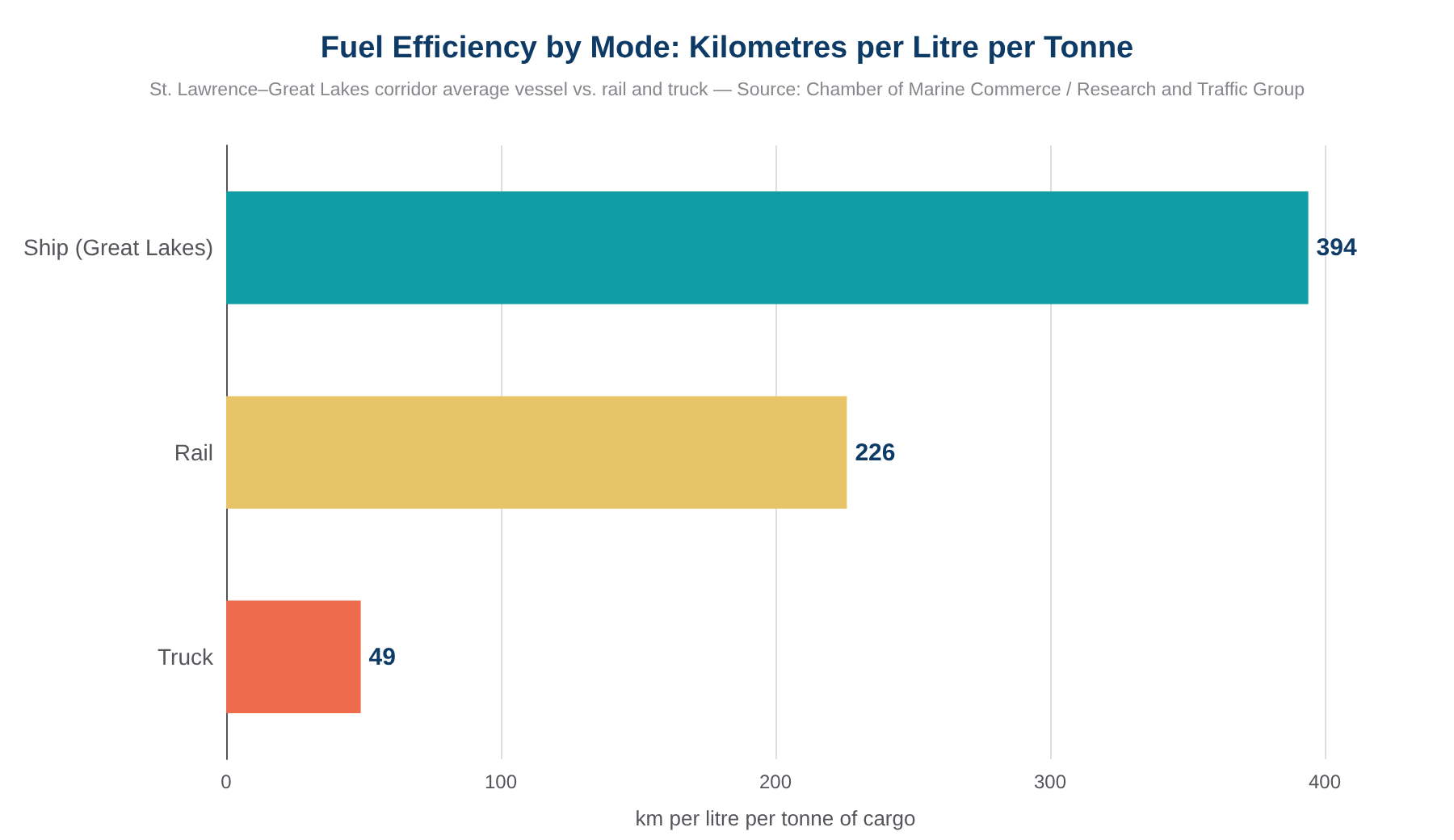
The efficiency figures are the best advertisement coastal shipping has. A vessel on the St. Lawrence–Great Lakes Seaway can carry one tonne of cargo 394 kilometres on a single litre of fuel, versus 226 km by rail and just 49 km by truck; moving the same cargo by rail or truck instead would produce 31% more GHG emissions by rail and 558% more by truck, and trucking the Great Lakes fleet's cargo would add USD 4.6 billion in highway maintenance costs over 60 years (Clear Seas / Chamber of Marine Commerce). Yet the trade is shrinking with the region's heavy industry: iron ore's long decline as mini-mills replace integrated lakefront steelworks is documented by the US Congressional Research Service, and 2026 first-half ore shipments remained 4.6% below the five-year average despite year-on-year growth (CRS, WorkBoat).
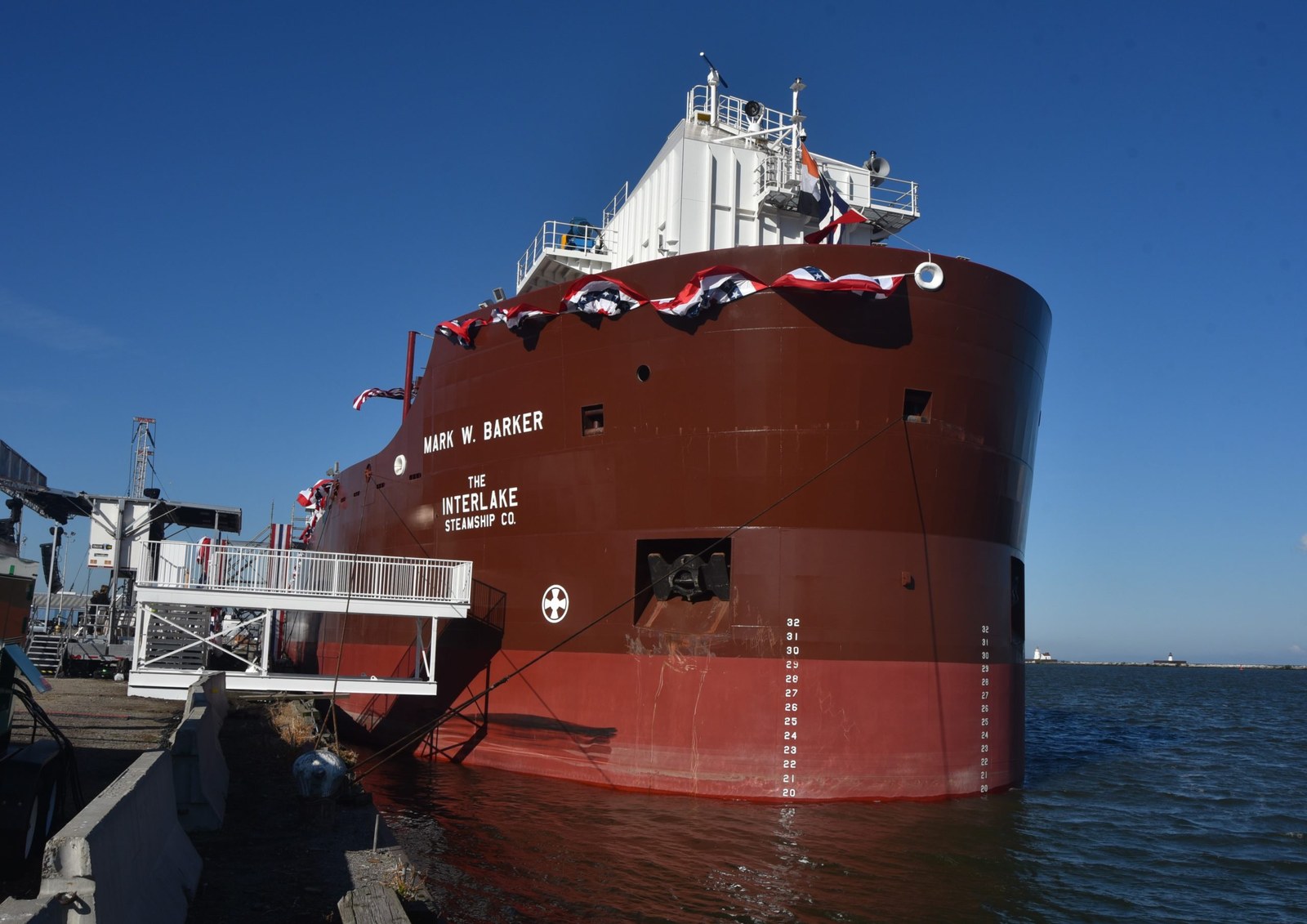
The Mark W. Barker, the first new US-flag Great Lakes freighter built in decades, at her 2022 christening. Lakers of up to 1,000 feet carry as much as 80,000+ tonnes of ore per trip. Photo: Great Lakes Now.
7. Archipelagos and Emerging Giants: Indonesia, the Philippines, Brazil, Australia
For archipelagic nations, the coastal trades are not an option but the connective tissue of the state. Indonesia's Tol Laut ("Sea Highway") programme, launched in 2015, created subsidised scheduled shipping routes linking the main western hub ports with remote eastern islands; field research in Sorong Regency found the programme cut delivery times by 30%, reduced logistics costs by up to 20% and increased distribution volumes by up to 50%, with mining and energy cargoes at 34% of tonnage — though port infrastructure and shipping frequency remain constraints (PJLS). The hub-and-spoke model connecting Makassar and Bitung with dozens of small eastern ports has measurably integrated what was effectively an archipelago of disconnected economies.
The Philippines took a different route: instead of subsidised cargo liners, it built Roll-on/Roll-off "nautical highways". Launched in 2003 under Executive Order 170, the Strong Republic Nautical Highway linked Luzon, the Visayas and Mindanao with Ro-Ro ferry chains, slashing Mindanao–Luzon travel time from 36 to 24 hours and cutting freight costs by about 30% (JICA, ADDU/MODA). By 2008 there were 68 Ro-Ro routes operated by 49 companies with more than 250 Ro-Ro vessels, and commodity-level studies documented freight savings of 31–46% on goods ranging from fresh fish to electronics (MODA). Regulators continue to expand the system — MARINA declared 19 additional "missionary routes" in 2019 to reach unserved islands (MarineLink).
Brazil and Australia show the two opposite regulatory experiments. Brazil's BR do Mar programme (Law 14,301/2022) liberalised its cabotage market — allowing Brazilian shipping companies to bareboat-charter foreign vessels without tonnage limits, rising from two foreign vessels in 2024 to unlimited chartering from 2027 — with the government targeting a 40% expansion of the cabotage fleet in three years, a 65% increase in containerised coastal cargo, and a 15% cut in operating costs; implementing regulations followed in Decree 12,555/2025 (ICCT, Vieira Rezende). Australia went the other way and paid the price: between 2000 and 2012 shipping's share of the Australian freight task collapsed from 27% to under 17% while total freight grew 57%, the major coastal fleet shrank from 30 ships in 2006-07 to 13 by 2012-13, and coastal freight loaded fell from over 59 Mt to 49 Mt — with an Australian-flagged ship costing around USD 5 million a year more to operate than a comparable foreign vessel (Australian Government). The Bass Strait trade to Tasmania — where coastal shipping is the only viable bulk link to the mainland — survives largely on federal freight subsidies.
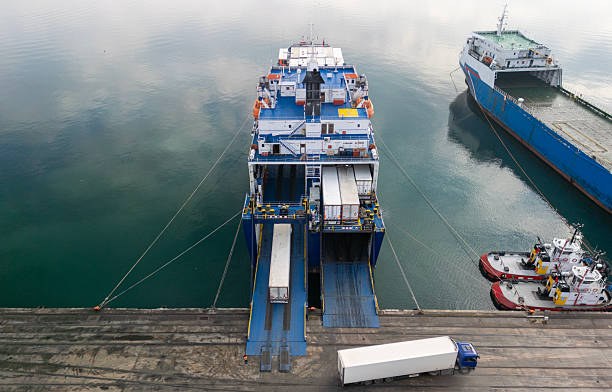
A Ro-Ro vessel loading trucks at a coastal terminal. Ro-Ro short-sea services move hundreds of thousands of trucks off congested highways onto ships every year. Photo: iStock.
8. The Ships and the Cargoes
The coastal trades employ the most diverse vessel population in shipping. Table 1 summarises the main vessel families and the real-world trades they serve.
Principal vessel types of the coastal trades, with real-world examples
Vessel type
Typical size
Typical cargoes
Real-world example
General cargo coaster
1,500–8,500 dwt
Steel, timber, grain, project cargo, fertiliser
Wilson ASA's ~135–140 vessel fleet trading North Sea–Baltic–Bay of Biscay (Wilson)
Container feeder
300–3,000 TEU
Containerised cargo hub-to-spoke
Feeder networks fanning out from Singapore, Algeciras, Gioia Tauro and Tanger Med (PortEconomics)
Panamax coal shuttles on China's 1,500–2,000 km "north coal to south" routes (Ballast Markets)
Coastal tanker / tank barge (ATB)
3,000–50,000 dwt
Crude, products, chemicals, LPG
Kirby's coastwise tank barges on all three US coasts, USD 387m coastal revenue in 2025 (Kirby 10-K)
Great Lakes laker
up to 1,013 ft, ~80,000 t
Taconite, limestone, coal, salt, cement
The 1,000-foot self-unloaders of the US-flag fleet (Wikipedia)
Traditional craft (dhow, pinisi)
up to ~2,000 t
Foodstuffs, timber, general cargo
Dhows moving 14,000–18,000 t/month of food to Yemen (IPCS)
The defining economics are frequency and flexibility rather than scale. A 4,000-dwt coaster can load in a small tidal port, sail 600 nautical miles overnight, and discharge with minimal shore equipment — a door-to-door substitute for 150 truckloads. Feeder ships play a different structural role: they are the spokes of the hub-and-spoke container system, shuttling boxes between regional ports and mega-hubs such as Singapore, Algeciras, Gioia Tauro, Marsaxlokk and Tanger Med, whose entire business model depends on short-sea connections (PortEconomics, EU ETS study). In containerised SSS, Europe's top five ports alone — led by Antwerp-Bruges and Rotterdam at 40 Mt each — handled 38% of all short-sea container tonnage in 2022, with Antwerp-Bruges also the largest Ro-Ro short-sea port at 21 Mt (Eurostat).
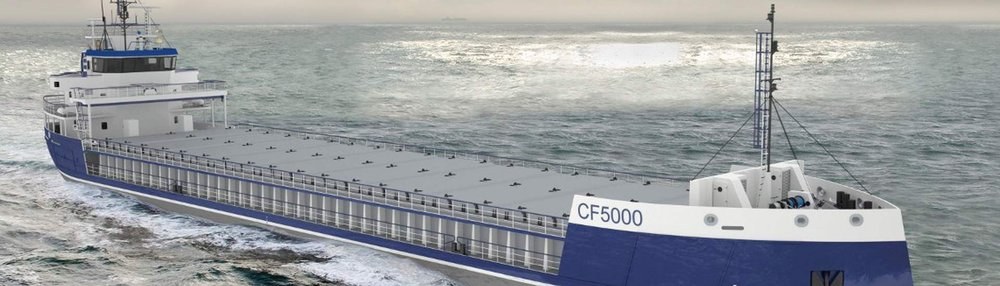
The CF5000, a next-generation 5,000-dwt short-sea vessel concept developed under the Norwegian SMASH! project — the shape of the future coastal fleet. Image: SMASH! project.
9. The Economics and Environmental Case
The case for the coastal trades rests on physics. Water resistance grows slowly with hull size, so a ship's fuel burn per tonne-kilometre is a fraction of a truck's. The Great Lakes comparison cited above — 394 km per litre per tonne by ship versus 49 km by truck — is the most striking published figure, and European analyses point the same way: typical CO₂ efficiencies for ships run roughly 0–60 g per tonne-kilometre versus 80–180 g for road transport, with modal-shift market studies attributing roughly 30% CO₂ savings per tonne-kilometre when freight moves from road to short-sea routes (Clear Seas, SmartTEH, 24MarketReports). The European Environment Agency's hierarchy of low-carbon motorised transport puts rail and waterborne transport at the bottom of the emissions curve, with road and aviation far above (EEA).
Kilometres travelled per litre of fuel per tonne of cargo, by mode — the fundamental physics behind the coastal trades' environmental case (author's chart; data from the Chamber of Marine Commerce study via Clear Seas).
Yet shippers are not charities, and surveys show what actually drives modal shift. In a peer-reviewed study of freight decision-makers considering short-sea alternatives, 64.6% of respondents cited "substantial cost savings" as the most valuable outcome of switching to SSS, while environmental benefit ranked lowest at 4.2%; satisfaction was highest on accuracy, quality and frequency, and lowest on cost efficiency, dependability and capacity (MDPI Sustainability). The lesson for policymakers is blunt: the coastal trades grow when they are cheaper and at least as reliable as trucking — environmental virtue is the bonus, not the sales pitch. Where services achieve that, as on the Turkey–Italy Ro-Ro corridor or China's coastal coal shuttles, they scale enormously; where they don't, as Australia's experience shows, no amount of geographic logic saves them.
10. Regulation, Decarbonisation and the Coastal Fleet of the Future
The regulatory weather around coastal shipping is shifting fast. At the global level, the IMO's Net-Zero Framework — approved at MEPC 83 in April 2025 as the world's first combination of mandatory emissions limits and GHG pricing across an entire industry — would apply to ships over 5,000 gross tonnage (which emit 85% of international shipping's CO₂), with a two-tier carbon pricing system charging USD 100–380 per tonne of CO₂-equivalent; adoption, however, was dramatically adjourned in October 2025 for one year amid member-state divisions, leaving the timeline uncertain (IMO, SFOC, Pacific Basin). In Europe, the EU ETS already covers maritime emissions — with the share of emissions requiring allowances rising from 40% to 70% in 2026 — and FuelEU Maritime has applied since January 2025, directly raising costs for the intra-EU short-sea fleet (Eimskip, Seacon Shipping).
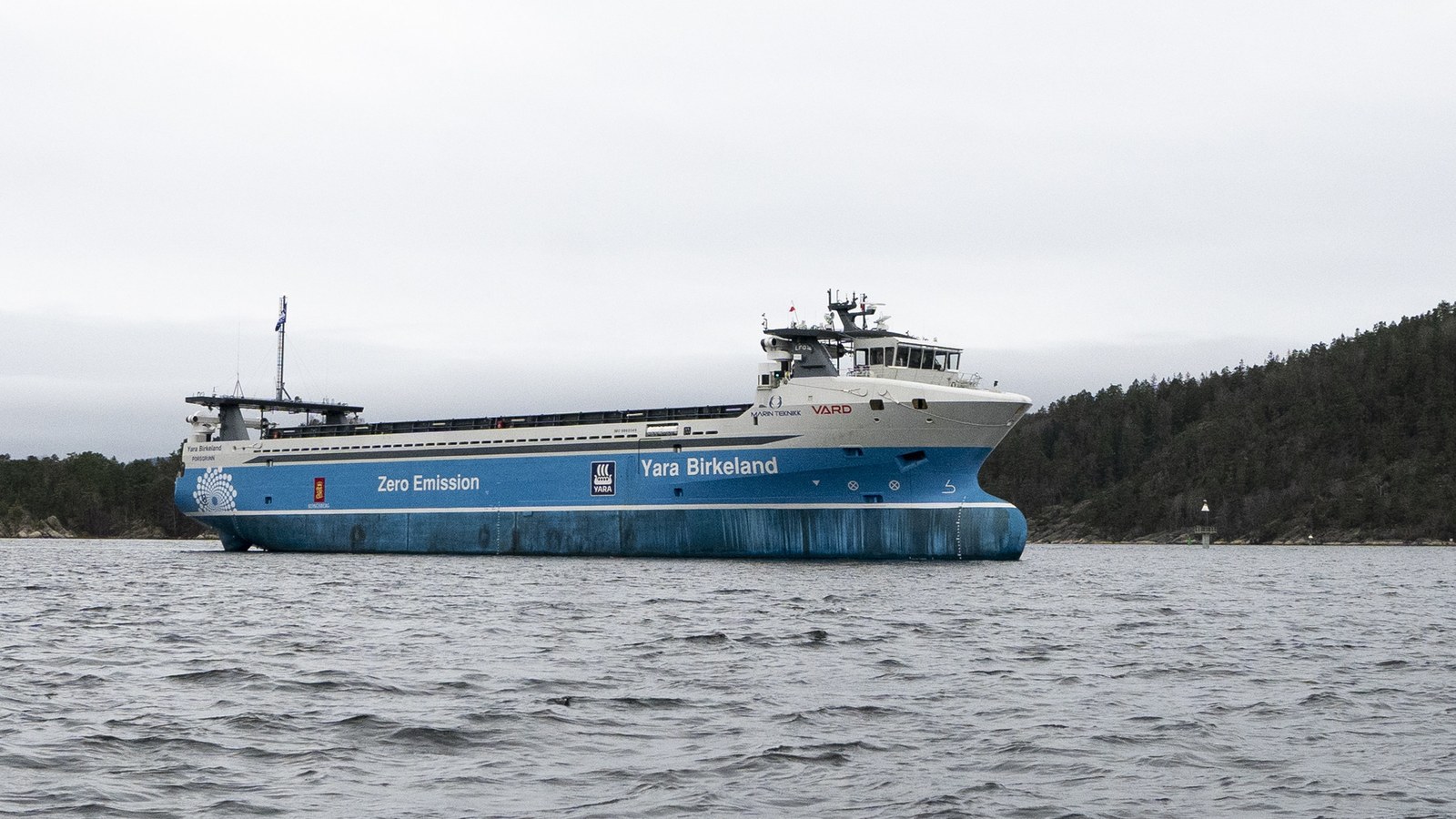
Paradoxically, short-sea shipping — with its small vessels, fixed routes and short legs — is the segment best positioned to decarbonise first, and it is producing the industry's flagship projects. The Yara Birkeland, the world's first fully electric and autonomous container ship, entered commercial operation in Norway in 2022: an 80-metre, 3,120-dwt, 120-TEU vessel powered by a 6.7 MWh battery, shuttling fertiliser from Yara's Porsgrunn plant to the port of Brevik and replacing around 40,000 diesel truck journeys a year (European Alternative Fuels Observatory, Leclanchè/PR Newswire). The EU-funded MOSES project has demonstrated automated docking systems, robotic container handling for small ports, and autonomous feeder concepts to strengthen SSS's role in door-to-door chains (CORDIS). In the coaster segment, owners such as Wilson are chartering Hanse Eco-class vessels promising up to 50% CO₂ reduction versus conventional tonnage (Afloat), and by mid-2025 over 80% of new orders for green-powered vessels globally were LNG- or methanol-dual-fuel (CSSC Shipping).
The Yara Birkeland — the world's first fully electric, autonomous container ship — on her Norwegian coastal route. Battery-electric propulsion is viable precisely because coastal legs are short and predictable. Photo: Offshore Energy.
11. The Honest Challenges
For all its advantages, the coastal trade model has real weaknesses that explain its uneven global performance. Port infrastructure is the first: short-sea economics depend on fast, cheap port calls, and many secondary ports lack the berths, cranes, gates and digital clearance systems to turn a small ship around in hours rather than days. The EU's MOSES project identified exactly this — large ships consume time berthing, and many small ports lack the necessary infrastructure — as a core vulnerability of European SSS (CORDIS). India faces the same gap at scale: average turnaround time, though improved to 52.4 hours, remains far above the international benchmark of about 24 hours (KIEP).
The second challenge is the fleet itself. Coastal fleets skew old — India's coastal committee report describes "ageing tonnage and a very small containerised coastal fleet" as a binding constraint (DG Shipping) — and small ships earn thin margins, making newbuilding finance hard even when regulations demand cleaner tonnage. Third, cabotage rules cut both ways: the Jones Act preserves a US domestic industry but at a documented cost premium (Australia's experience suggests domestic-flag operation can cost millions of dollars per ship per year more than foreign-flag alternatives), while liberalisation à la BR do Mar risks hollowing out national fleets (Australian Government). Finally, coastal shipping competes against a subsidised rival everywhere: road haulage, whose congestion, accident, noise and pavement-damage costs are largely externalised — the exact externalities SSS avoids (MDPI Sustainability).
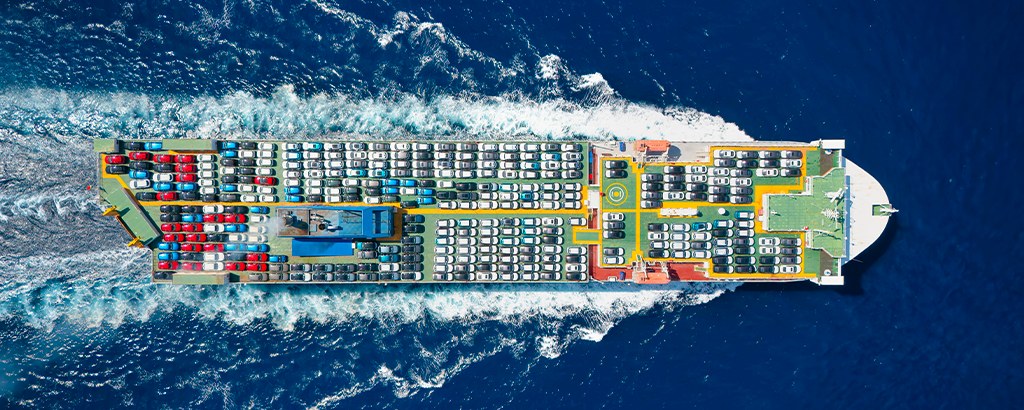
An aerial view of a Ro-Ro vessel fully loaded with vehicles. High-frequency coastal Ro-Ro and car-carrier services are among the fastest-growing niches of the short-sea market. Photo: Savino Del Bene.
12. Outlook: The Renaissance of the Shoreline Trade
Every long-term driver now points the same way. Intra-regional trade is growing faster than intercontinental trade in ton-miles terms as supply chains regionalise; road freight faces structural driver shortages in Europe, Japan and North America; carbon pricing is making the truck's emissions advantage-free; and electrification — impractical for ocean crossings — is ideally suited to short, fixed coastal legs with overnight charging. The EU's experience shows that policy alone cannot move modal share, but the convergence of economics, congestion, carbon cost and technology is a more powerful force than any subsidy programme. Market analysts project mid-single-digit growth for short-sea shipping services through the early 2030s, with Asia-Pacific the fastest-growing region and Europe the largest by revenue (24MarketReports).
The coastal trades began as sewn-plank dhows riding the monsoon between Arabia and Africa, and they will likely end this century as autonomous battery-electric coasters gliding between Rotterdam and Hull. What has not changed in two thousand years is the proposition: where there is a coastline, a cargo, and a destination within a few hundred nautical miles, the cheapest, cleanest and most resilient way to move it is by sea. For anyone watching the future of maritime trade, the shoreline — not just the ocean — is where the action increasingly is.
This article is provided for general informational purposes only and does not constitute professional, investment, legal or commercial advice. Statistics reflect the most recent data available from the cited sources at the time of writing (October 2026). Photographs are reproduced for editorial illustration with credit to their respective sources as captioned.