AI Will Not Empty the Ships: It Will Redefine Who Makes the Decisions
Artificial Intelligence, the Future of Maritime Jobs, and the New Value of Human Judgement
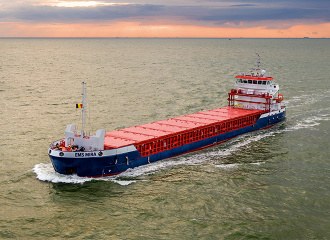
Artificial intelligence is likely to change maritime work first through decision support, automation and new operating models—not through the sudden disappearance of human expertise.
Shipping has survived technological revolutions before. Steam replaced sail. Containerisation transformed ports, ships and global trade. Satellite navigation changed how vessels move across oceans. Artificial intelligence introduces a different kind of change: it increasingly challenges the division between work performed by people and decisions supported by machines.
The question is no longer simply whether AI will replace maritime jobs. The more important question is which tasks can be delegated to machines, which decisions require human oversight, and how the industry will prepare its people for that transition.
The first transformation will happen before ships become autonomous
Public discussion often focuses on crewless vessels crossing oceans. Yet a more immediate transformation is underway across the wider maritime business: chartering teams comparing contractual clauses, operators assessing voyage estimates, technical departments monitoring equipment data, and claims teams organising evidence.
AI tools can assist with document comparison, voyage and fuel analysis, maintenance alerts, regulatory paperwork, claims chronologies and routine communications. These are meaningful productivity opportunities, but the value depends on data quality, the suitability of the tool and the ability of experienced people to challenge its output.
A voyage recommendation that appears optimal on a screen may be commercially unattractive because of a charter-party restriction. A technically plausible recommendation may be unsafe in adverse weather. An ETA forecast may not account adequately for berth availability, congestion or a sudden disruption. Processing information is not the same as understanding the entire commercial and operational context.
Shipping is an industry where context matters
Maritime decisions are made with incomplete, delayed or inconsistent information. Commercial priorities can conflict with operational considerations, and regulatory obligations vary across jurisdictions. Experience matters because real-world conditions do not always match the model.
An experienced operator does more than read an ETA. A capable superintendent does more than review an alarm. These professionals recognise when assumptions are weak, identify dangerous exceptions and understand when an apparently sensible recommendation should be questioned.
The competitive advantage may therefore belong not to the company with the most sophisticated model, but to the company that combines reliable data, maritime experience, intelligent systems and clear human accountability.
Autonomous shipping is progressing—but not overnight
The International Maritime Organization has been developing an international regulatory framework for Maritime Autonomous Surface Ships (MASS). Its work addresses safety and the regulatory questions raised by ships that may be remotely controlled or operate with varying degrees of autonomy. The precise requirements and implementation timetable should be checked against the IMO's latest published updates as the framework evolves.
Autonomy should not be treated as a universal authorisation for crewless commercial shipping. Operational limits, risk assessment, emergency response, cybersecurity and responsibility for decisions remain central questions. The near-term challenge is to prepare for systems that support or execute an increasing number of decisions, both at sea and ashore.
Which maritime jobs will change first?
1. Chartering, commercial operations and post-fixture
AI can assist with document comparison, voyage estimates, laytime calculations, invoice checks and claims chronologies. The human advantage will increasingly lie in negotiation, contractual interpretation, commercial strategy and recognising exceptions that automated workflows miss.
2. Fleet operations and technical management
Predictive-maintenance systems can help identify developing equipment problems. AI-assisted analysis may improve fuel-performance monitoring, voyage planning and the prioritisation of inspections. Their usefulness depends on sensor quality, model limitations and engineering judgement.
3. Ports, cargo handling and logistics
Automation and optimisation tools can improve terminal scheduling, equipment use and cargo coordination. Employment may shift towards systems supervision, maintenance, exception management, planning and the integration of operational data.
4. Compliance, insurance and claims
AI can help organise documentation, identify inconsistencies and prepare preliminary reports. It does not eliminate the need for legal interpretation, independent investigation, verification or accountable decisions.
5. Seafaring and remote operations
As automation develops, some tasks traditionally performed on board may be supported by sensors, decision-support systems or remote operations centres. This does not mean that all seafarers will become obsolete. It means that future competence may combine navigation, engineering, emergency management and digital-system literacy.
The employment risk is the failure to adapt
The International Labour Organization's 2025 analysis of generative AI estimated that one in four workers worldwide is in an occupation with some degree of exposure to generative AI, while concluding that transformation of jobs is generally more likely than their complete elimination. This is a global finding, not a shipping-specific employment forecast—but it is a useful reminder that exposure does not automatically mean a job will disappear.
The outcome in maritime businesses will depend on how technology is deployed, which tasks are automated, whether productivity creates new demand and whether workers have opportunities to develop new skills. Some repetitive information-processing roles may shrink or change substantially. New specialisms may develop in remote supervision, autonomous-system assurance, maritime cybersecurity and human-machine operations. There is no guarantee that new roles will automatically offset reductions elsewhere.
Buying software is relatively straightforward. Building an organisation that knows when to trust it, when to question it and who is accountable when it fails is much harder.
The next generation needs a combination of skills
The future will not require every ship operator to become a computer scientist. It will reward professionals who combine three capabilities:
Maritime knowledge: vessels, cargoes, charter parties, engineering, safety, port operations and international trade.
Digital competence: using AI tools effectively, interpreting analytical outputs, recognising unreliable answers and understanding data quality and cybersecurity.
Human judgement: negotiation, risk prioritisation, communication under pressure, dispute resolution and responsibility for decisions.
The combination is more valuable than any one capability in isolation. Training should make digital competence a complement to conventional seamanship, engineering and commercial expertise—not a substitute for them.
What should shipping companies do now?
Companies should start with clearly defined problems: reducing avoidable administrative work, detecting equipment anomalies earlier, improving documentation quality or giving operators better information for voyage decisions. They should measure results against safety, reliability, cost, productivity and decision quality—not merely the number of tasks automated.
They should also establish rules for human approval, data protection, cybersecurity, audit trails and responsibility for errors. Where jobs are likely to change, training and workforce planning should begin before new systems become embedded in daily operations. AI implementation is an organisational transformation, not merely an IT procurement exercise.
The future belongs to the maritime professional who can challenge the machine
For centuries, shipping has depended on decisions made with imperfect information. Technology has changed the instruments available, but it has not removed uncertainty from the sea or commerce from the voyage.
AI will make some decisions faster, make some activities cheaper, reduce demand for certain tasks and create new specialisms. Its greatest value will depend on people who can integrate its capabilities into the real world.
The industry should not measure progress only by how many jobs can be removed from a process. It should ask how much safer, more efficient, resilient and commercially intelligent that process becomes—and what happens when the technology gets it wrong.
The most valuable maritime professional of the future may not be the person who knows the most answers. It may be the person who knows which answers should never be accepted without question.
Will shipping use AI simply to reduce the cost of maritime work, or use it to build a more capable, safer and better-prepared maritime workforce? The answer will help define the competitive structure of shipping for decades to come.